We pull into a lot of Deltona driveways where the homeowner has already done everything right: new smart thermostat on the wall, filters changed on schedule, system serviced last spring. And the house still won't cool right. Rooms that should be comfortable stay stuffy, and the back bedroom never quite gets to setpoint no matter how long the system runs.
In our experience across Volusia County, that gap between what the equipment promises and what the house actually delivers almost always traces back to the ductwork. Most of Deltona's homes were built during the flex duct era, when foil tape and hand-applied mastic were the standard at every joint. Three decades of Florida humidity, relentless attic heat, and structural settling have opened enough joint failures in those systems to bleed a meaningful share of every cooling cycle into unconditioned attic space before it ever reaches a vent.
That's what aeroseal HVAC air duct sealing in Deltona addresses. Aeroseal is a computer-controlled, inside-out process that permanently seals the leak points tape and mastic can't reach: hidden joint separations, attic-run gaps, and seam failures buried behind drywall. It doesn't replace your system. It makes the system you already have deliver what it was supposed to all along. For a city like Deltona where the HVAC runs 10 to 11 months out of the year, getting that delivery system right is one of the highest-return improvements a homeowner can make.
TL;DR Quick Answers
Air Duct Sealing in Deltona
Air duct sealing in Deltona is the process of closing the leaks, joint separations, and seam failures inside a home's duct system so conditioned air reaches every room instead of escaping into the attic. Most Deltona homes were built between the 1970s and early 2000s with flex duct systems that degrade under Florida's heat and humidity over time. We use Aeroseal, a computer-controlled process that pressurizes the duct system and seals leaks from the inside out, including the ones buried in attic runs that tape and mastic can't reach. The result is documented in a pre-and-post diagnostic report showing exactly how much leakage was eliminated.
Top Takeaways
Deltona’s housing stock carries built-in leak risk. The city’s median home construction year is 1988. Flex duct systems common to that era were installed with tape and mastic, materials that degrade under Florida’s humidity and heat cycling and leave joints partially or fully separated over time.
Aeroseal works from the inside out. Traditional sealing methods can only address accessible duct surfaces. Aeroseal reaches and seals every leak in the system, including the ones behind walls, above ceilings, and in attic runs, without any demolition.
Your smart thermostat can only perform as well as your ductwork allows. Uneven temperatures, extended run times, and rooms that never reach setpoint are symptoms of duct leakage, not smart thermostat failure. Sealing the ducts gives the automation something solid to work with.
The U.S. Department of Energy puts typical losses at 25 to 40 percent. That’s the share of conditioned air that escapes through leaky ducts before it reaches living spaces in the average American home, a figure that climbs further in older construction with aging flex duct systems.
You get documented proof. Aeroseal’s computerized pre-seal and post-seal diagnostic report shows exactly how much leakage existed and exactly how much was eliminated. It’s a measurable result, not an estimate.
The Deltona Duct Leakage Problem
Deltona was largely built between the 1970s and the early 2000s, a period when flex duct was the residential HVAC standard and hand-applied mastic or foil tape handled the joints. That approach worked well enough when the houses were new. It rarely holds up across 30 years of Volusia County humidity.
What happens over time is predictable. Florida’s subtropical heat causes duct materials to expand and contract through thousands of daily cycles. Attic temperatures in summer routinely hit 140 to 160 degrees Fahrenheit, far beyond what most duct tape and connector fittings were designed to handle long-term. Joints pull apart, seams work open, and flex duct connections loosen at their collars. None of it is visible from anywhere in the living space.
The result shows up as a home that takes forever to cool, rooms that never match the thermostat setting, a utility bill that keeps climbing, and filters clogging faster than they should. We’ve walked into Deltona attics where duct systems were losing 30 percent or more of conditioned airflow into unconditioned space, every cooling cycle, all year long. The equipment was fine. The delivery system had failed.
How Aeroseal Works
The process starts with a pre-seal diagnostic. Our technicians block all the registers and vents in the home, pressurize the duct system, and use computerized instrumentation to measure total leakage in cubic feet per minute. That reading establishes the baseline: what the system is currently losing.
Sealing happens from the inside. A small access point opens near the air handler, the Aeroseal equipment connects to the ductwork, and the system aerosolizes a non-toxic, water-based polymer sealant (the same class of material found in chewing gum and hairspray) and distributes it through the pressurized duct system under computer control. The sealant particles stay suspended in moving air until they reach a point where air is escaping. At a joint separation, a seam gap, or a collar failure, the particles are forced to the edges of the opening and begin to bond and build until the leak closes completely. Gaps up to 5/8 of an inch seal that way.
The process reaches every part of the duct system, including sections buried in walls and running through attic spaces that no tape-and-mastic approach could access. When sealing is complete, a post-test measures leakage again. The difference between the two numbers is printed in a computerized report: documented proof of exactly what was accomplished.
The full service typically runs between four and six hours for a single-system Deltona home, with no demolition, no duct replacement, and the home occupied throughout.
Why Sealed Ducts Are the Foundation Your Smart Home Needs
Smart thermostats are genuinely sophisticated tools, but they operate on one important assumption: that conditioned air is actually reaching the rooms their sensors are measuring. A Nest or Ecobee adjusts HVAC cycling based on temperature readings, occupancy detection, and learned schedule patterns. When the air it’s counting on escapes into the attic before it reaches any register, those algorithms are working with bad information.
When ducts are leaking significantly, the whole cycle breaks down. Your system delivers conditioned air into the duct, a meaningful percentage escapes before it reaches any register, the rooms the thermostat is monitoring stay warmer than setpoint, and the thermostat responds by running longer cycles. Your HVAC works harder and longer than it needs to, and your Duke Energy bill reflects every extra hour of that.
After Aeroseal sealing, airflow distribution balances across the home the way the system was designed to work. The thermostat’s learned schedules and occupancy algorithms finally have accurate conditions to optimize against. Rooms that ran chronically warm or cold stabilize. Run times drop. The smart home investment starts delivering what it promised.
In our experience across Deltona service calls, homeowners who pair duct sealing with an existing smart thermostat see the most immediate and measurable improvement in comfort, precisely because they already have the automation in place. Sealing gives it something reliable to work with.
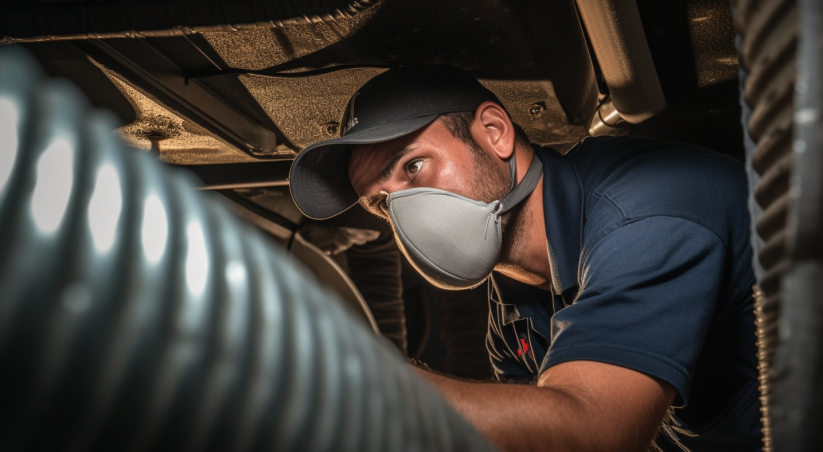
“In Deltona homes from the late ‘80s and ’90s, we almost always find flex ducts at the air handler collar that’s pulling away from the fitting. It looks connected from the outside but it’s open underneath, and that gap alone can account for 15 to 20 percent of total system leakage. A smart thermostat can’t compensate for that, but Aeroseal can.”
Essential Resources
What the U.S. Department of Energy Says About Duct Leakage and Your Energy Bill
If you want the federal data behind what we’re telling you about energy loss, this is where to start. The DOE’s consumer guidance on duct systems explains why leaky ductwork ranks among the single largest sources of energy waste in the average home and what sealing actually accomplishes.
Source: energy.gov — Minimizing Energy Losses in Ducts
How Aeroseal Duct Sealing Works, Explained by the Manufacturer
Aeroseal’s own explanation of the sealing process covers the pressurization mechanism, how sealant particles find and fill leak points, and what the before-and-after diagnostic captures. Worth reading before your first diagnostic call if you like to know exactly how a process works.
Source: aeroseal.com — How Aeroseal Duct Works
Aeroseal’s Residential Homeowner Resource
This page covers what the sealing process looks like inside a single-family home: what to expect during a service visit, how results get documented, and the questions most homeowners ask before scheduling.
Source: aeroseal.com — Duct Sealing for Homeowners
EPA’s Introduction to Indoor Air Quality
The EPA’s foundational overview of indoor air quality explains how ventilation, pollutant sources, and humidity interact inside a home. Relevant background if you’re concerned about what leaky return ducts are pulling in from attic space, which in Deltona’s climate is a real consideration.
Source: epa.gov — Introduction to Indoor Air Quality
EPA Guidance on Air Duct Cleaning and Contamination
The EPA’s homeowner guide on duct cleaning covers when cleaning is warranted, what contamination looks like, and how to evaluate any service provider. Good companion reading before any duct service.
Source: epa.gov — Should You Have the Air Ducts in Your Home Cleaned?
Deltona, Florida — City Background and Housing Context
Wikipedia’s entry on Deltona covers the city’s geography, population, housing development history, and climate, providing useful context for understanding why Central Florida’s subtropical conditions place specific demands on HVAC systems in this market.
Source: en.wikipedia.org — Deltona, Florida
Verify Your HVAC Contractor’s Florida License
The Florida Department of Business and Professional Regulation’s license lookup tool lets you confirm any HVAC contractor’s current certification before scheduling a visit. We encourage every Deltona homeowner to use it, including to verify us.
Source: myfloridalicense.com — License Verification
Supporting Statistics
25 to 40 percent. That’s the share of conditioned air the U.S. Department of Energy estimates a typical home loses through duct leaks: air that was paid for and treated but escapes into unconditioned spaces before it reaches a single vent.
Source: U.S. Department of Energy, energy.gov.
Up to 90 percent reduction in duct leakage. Aeroseal’s own performance data shows the technology reduces a duct system’s total leakage by up to 90 percent in a single service visit, backed by a 10-year warranty and third-party durability testing at Lawrence Berkeley National Laboratory demonstrating seal integrity beyond 40 years.
Source: aeroseal.com.
About 90 percent of our time is spent indoors. The EPA is clear: indoor air quality directly affects the health and comfort of everyone in the home. In Deltona homes with leaky return ducts drawing air from attic spaces, that indoor environment includes whatever the attic is carrying, including humidity, particulates, and degraded insulation fibers.
Source: U.S. Environmental Protection Agency, epa.gov.
Final Thoughts
For the typical Deltona homeowner with a home built between 1975 and 2000 and an HVAC system that runs most of the year, duct sealing is usually the right call. It addresses the actual problem rather than working around it.
We’ve been direct about this in every conversation we’ve had with Deltona homeowners: smart thermostats don’t fix leaky ducts, new equipment doesn’t fix them, and better air filters don’t either. Sealing is the only fix, and Aeroseal is the method that reaches the places every other approach misses. We’d tell our own neighbors the same thing.
One honest caveat: if a duct system has physically disconnected sections or structural damage, that needs to be addressed before sealing. Aeroseal seals gaps and joint failures. It isn’t designed to reconnect a fully detached run. The pre-diagnostic will catch that kind of problem before any work begins, which is exactly what that test is for.
In the vast majority of Deltona homes we evaluate, the duct system is structurally intact. It’s just leaking at enough small points to create a real performance problem. Aeroseal handles that completely. When the work is done, you’ll feel the difference in how the house holds temperature, hear it in how often the system cycles, and see it in what Duke Energy sends you the following month.
Frequently Asked Questions
How long does the Aeroseal process take in a typical Deltona home?
For most single-family homes in Deltona, the full process, including setup, pre-seal diagnostic, sealing, and post-seal test, runs between four and six hours. Larger homes or those with two HVAC systems may take longer. There’s no need to leave during the process, and cleanup is minimal.
Will duct sealing actually improve my smart thermostat’s performance?
In most cases, yes, and often more noticeably than homeowners expect. Smart thermostats manage HVAC cycling based on what their sensors read. When ducts are leaking and rooms aren’t reaching setpoint, the thermostat compensates by running longer and more frequently. Once airflow balances across the home, the thermostat’s scheduling and learning algorithms have accurate conditions to work with. Rooms stabilize. Run times drop.
How do I know if my Deltona home needs duct sealing?
The clearest signs are rooms that run consistently warmer or cooler than the rest of the house, a system that runs longer than it used to while delivering less comfort, utility bills that have crept up without a clear reason, and filters clogging faster than the manufacturer recommends. Deltona homes built before 2000 with original ductwork are strong candidates. A pre-seal diagnostic gives you the actual CFM leakage number, and that’s the definitive answer.
Is Aeroseal safe for my family and pets?
Yes. The sealant is a water-based, non-toxic polymer, the same material class found in chewing gum and hairspray. OSHA has certified it non-toxic and it carries UL approval. Aeroseal has been applied in operating medical facilities, including children’s hospitals, without requiring anyone to leave. Family members and pets can stay home during the process, though you may notice a faint, temporary odor similar to Elmer’s glue that clears within a few hours.
How long does Aeroseal duct sealing last?
Aeroseal carries a 10-year manufacturer warranty. Independent testing at Lawrence Berkeley National Laboratory has shown the sealant holds through stress simulations equivalent to more than 40 years of use with no degradation, putting it well ahead of conventional tape and mastic in long-term durability.
Can Aeroseal seal ducts in attic runs common in Florida homes?
Yes, and that’s exactly the scenario where it delivers the most value. Traditional mastic application requires physical access to every joint and seam, which simply isn’t practical in a fully installed attic duct system. Aeroseal pressurizes the duct from the inside and reaches every part of the system regardless of where it runs. The joint failures and collar separations common in older Deltona flex duct systems are precisely what the process is designed to close.
Ready to See What Your Deltona Home Is Actually Losing?
We start every Aeroseal job with a computerized pre-seal diagnostic that measures your duct system’s total leakage before a single drop of sealant is applied. You’ll know exactly what the problem is and what fixing it will deliver. Schedule your Deltona diagnostic and leave with documented numbers, not estimates.
Here is the nearest branch location serving the Tamarac FL area…
Filterbuy HVAC Solutions - Pompano Beach FL
2521 NE 4th Ave, Pompano Beach, FL 33064
(754) 484-4453